Cosmetic Safety · The Sterile Standard
Keeping Cosmetics Free From Germs
Cosmetic products can become unsafe when bacteria, fungi or other harmful microorganisms enter during manufacturing, storage or everyday use. In a salon, contamination can move through fingers, brushes, sponges, wands, palettes, testers and shared containers. Safe product handling therefore depends on controlling every contact—not simply keeping the packaging looking clean.
The central principle
A preserved cosmetic is not protected from careless handling
Preservatives help control microbial growth, but they are not unlimited protection. Repeated dipping, added water, dirty applicators, poor storage and damaged packaging can overwhelm the conditions the product was designed to tolerate.
Cosmetics do not need to be sterile, but they must not contain harmful microorganisms. Any salon product that develops suspicious changes or has been exposed through an unsafe process should be removed from client use.
How germs enter
Six routes from the environment into the product
Fingers inside a jar
Skin oils, moisture and microorganisms are transferred directly into the remaining product.
A used applicator returns to the container
A brush, wand or sponge touches the client and then contaminates shared product.
Water is added to change texture
Dilution can introduce microorganisms and reduce preservative effectiveness.
The closure is left open
Dust, droplets, insects and contaminated hands can reach the exposed product.
Heat or moisture damages the formula
Storage conditions can affect product stability, texture and preservation.
Product is moved into an unclean container
Decanting can introduce contamination and remove essential identification information.
Packaging changes the contact risk
Every format needs a different handling rule
Closed pump
Product leaves through a controlled opening without fingers entering the main container.
Squeeze tube
The product can be dispensed without opening the full formula to the environment.
Open jar
A wide opening exposes a larger surface and encourages finger dipping.
Built-in wand
The applicator repeatedly returns to the formula after touching lashes, lips or skin.
Pressed powder or palette
Brushes contact an exposed surface that may be used across multiple applications.
The clean dispensing route
Product leaves the container once
The safest workflow separates the shared container from anything that has touched the client.
Prepare
Clean hands and the dispensing surface
Set out a clean palette, tissues, spatulas and disposable applicators before the service begins.
Dispense
Remove only the amount required
Use a pump, clean spatula or controlled pour without touching the container opening.
Close
Replace the lid or cap immediately
Do not leave the shared product open while application continues.
Apply
Work only from the dispensed portion
Use clean or disposable applicators and never return unused product to the container.
Discard
Dispose of leftovers and single-use items
A used portion cannot safely return to shared stock.
Open jars need strict control
Never use the same spatula twice
A spatula is clean only until it touches product, a palette, a glove or the client. Returning it to the jar can carry contamination into the remaining formula.
Prepare several single-use spatulas before the appointment or use a clean reusable spatula for one dip, then place it immediately into the used-tool area.
Shared testers
Public sampling needs a no-return system
Remove product onto a palette
Use a clean tool to take a portion, then apply with a new disposable lip applicator.
Use one disposable wand per dip
Never place the same tester wand back into the tube after it has touched lashes.
Sharpen before each client
Remove the previously exposed surface using a clean sharpener and the approved procedure.
Use a clean removal method
Take product with a clean tool or follow a product-compatible surface sanitation method.
Prevent direct finger contact
Use controlled dispensing, a clean spatula and a separate palette.
Do not use it on clients
A product repeatedly touched by unknown hands and applicators cannot be treated as clean stock.
Higher-consequence areas
Eye and lip products deserve stricter handling
Do not share personal eye cosmetics
Applicators used around the eye can move microorganisms between users and back into the product.
Stop using eye makeup
Products used during an infection may need to be discarded to reduce repeated exposure.
Never add water or saliva
Adding liquid can introduce bacteria and disrupt the original preservative balance.
Avoid application over active sores
Do not use shared lip products on broken, infected or visibly inflamed skin.
Applicator control
Clean product can be contaminated by a used tool
Brushes and sponges are separate from the product but can become the route that carries contamination back into it.
Begin with processed, fully dry tools
Keep clean brushes and sponges protected from used applicators and dust.
Keep the applicator within one service
Do not use the same brush on multiple clients without complete cleaning and drying.
Work from a palette, not the shared container
This prevents the used tool from returning directly to stock.
Move immediately to the used-tool zone
Do not place used brushes back among clean tools.
Clean with a suitable method
Remove cosmetic residue thoroughly and follow tool and cleanser instructions.
Store only when completely dry
Persistent moisture can support microbial growth and damage some applicators.
Do not reformulate at the workstation
Adding water can change more than texture
Water, saliva, toner or another cosmetic should not be added to a product unless the manufacturer specifically instructs it. Dilution can introduce microorganisms, alter preservation, change performance and make the original safety information unreliable.
When a product becomes dry, thick, separated or difficult to dispense, inspect it and replace it rather than improvising a new formula.
The storage audit
Protect products between appointments
Avoid excessive heat
Hot windows, cars and equipment surfaces can affect formula stability and packaging.
Keep stock away from damp areas
Bathrooms, sinks and wet towels increase splash and humidity exposure.
Protect from direct light
Some ingredients and packaging can degrade when exposed repeatedly.
Keep lids and caps secure
Open containers lose protection from dust, evaporation and accidental contact.
Separate products from used tools
Do not store stock beside dirty brushes, waste, laundry or cleaning equipment.
Keep the original label
Identity, batch information, warnings and instructions should remain available.
Decanting products
A smaller container creates new responsibilities
Moving product out of its original packaging can introduce contamination, expose it to incompatible materials and separate it from the original label.
Where decanting is permitted by the product and workplace procedure, the receiving container must be clean, dry, compatible and clearly identified. Never refill a partly used container without first following the approved cleaning process.
Clean, dry and compatible
Product name remains clear
Batch and opening information retained
Secure against leaks and contact
The product condition check
Changes that should stop client use
New, sour or unusual odour
A changed smell can indicate formula breakdown or contamination.
Unexpected darkening, fading or spotting
Compare against the product’s normal appearance and packaging guidance.
Separation, clumping, stringiness or excessive drying
Do not repair the product by adding liquid or mixing it with another formula.
Swelling, leakage, rust or a damaged closure
The container may no longer protect the contents properly.
Visible growth, film or unexplained particles
Remove the product from use without smelling it closely or touching the contents.
Unexpected burning, swelling or infection concern
Stop use, record the product details and follow the incident procedure.
When contamination is suspected
Remove the product before investigating it
Stop using the product
Do not continue applying it while deciding whether the change is serious.
Keep it away from active stock
Label and isolate the container so another professional cannot use it accidentally.
Record identifying information
Note the product name, batch or lot, opening date, supplier and observed change.
Review related products and tools
Check whether shared applicators, palettes or stock were exposed through the same process.
Follow supplier and reporting guidance
Contact the manufacturer or relevant authority when a defect or adverse event is suspected.
What clients should observe
Safe product handling is visible in the service
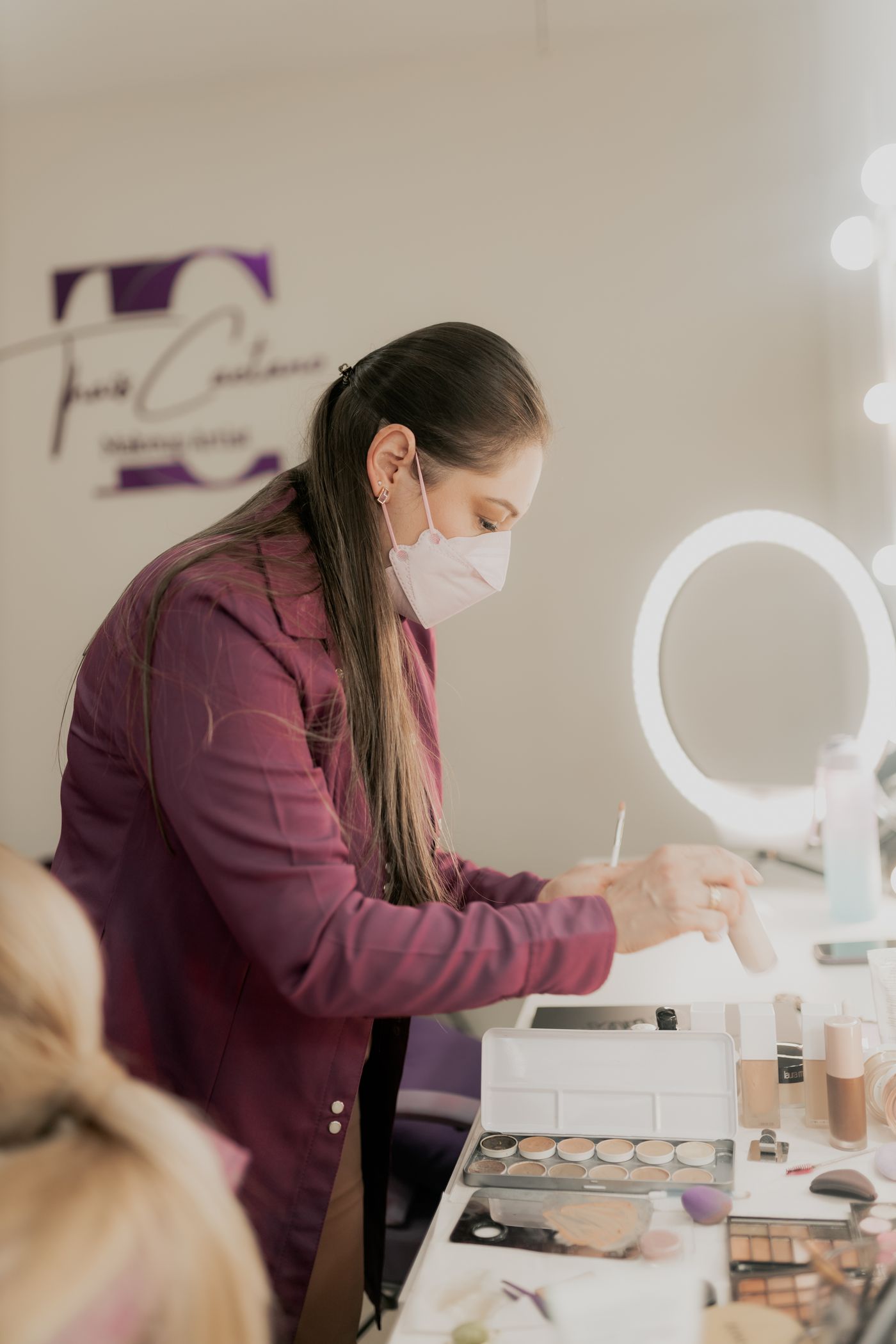
Shared products are closed between uses, creams are removed with clean spatulas, wands and lip applicators are disposable where required, and brushes used on the client do not return to palettes or containers.
Testers are controlled, damaged products are removed promptly and the workstation separates clean stock from used applicators, waste and contaminated surfaces.
Health response
When a reaction or infection needs assessment
Seek medical advice for significant eye pain, discharge, worsening redness, facial swelling, breathing difficulty, spreading rash, pus or persistent symptoms after a cosmetic product is stopped.
Keep the product packaging and batch information available where possible, but do not continue testing a suspected product on the skin.