Hand Hygiene · The Sterile Standard
Clean Hands in Beauty Services
Hands move constantly between clients, tools, products, phones, towels and work surfaces. Each touch can carry germs to the next place. Effective hand hygiene interrupts that movement—but only when it happens at the correct moments, covers every hand surface and is repeated after gloves, cleaning tasks and unexpected contamination.
The central idea
Hand hygiene is a service checkpoint—not a one-time opening ritual
Cleaning hands at the start of an appointment is important, but it is not enough. Hands can become contaminated again after touching a phone, door handle, used towel, bin, cleaning cloth, payment device or unprocessed instrument.
The correct response is to clean hands again before returning to the client, clean tools or shared products. Gloves reduce direct contact but do not remove the need for hand hygiene.
The contact chain
One unclean touch can travel through the whole service
Hands touch the client
Skin, hair, nails and facial areas can transfer oils, skin cells and microorganisms.
Hands touch products
Jars, pumps, caps, brushes and palettes can become contaminated during dispensing.
Hands touch tools
Clean instruments can be contaminated before they reach the client.
Hands touch the next surface
Handles, phones and worktops can continue the chain to another client.
Choose the correct method
Soap and water or alcohol hand rub?
Both methods can support hand hygiene, but they are not interchangeable in every situation.
When hands are visibly dirty or contaminated
- Visible product, dust, oil or soil
- After using the toilet
- After contact with blood or body fluids
- When the written procedure specifically requires washing
When hands are not visibly dirty
- Between routine clean service contacts
- Before touching a prepared client area
- After removing gloves
- After touching a clean-looking high-contact surface
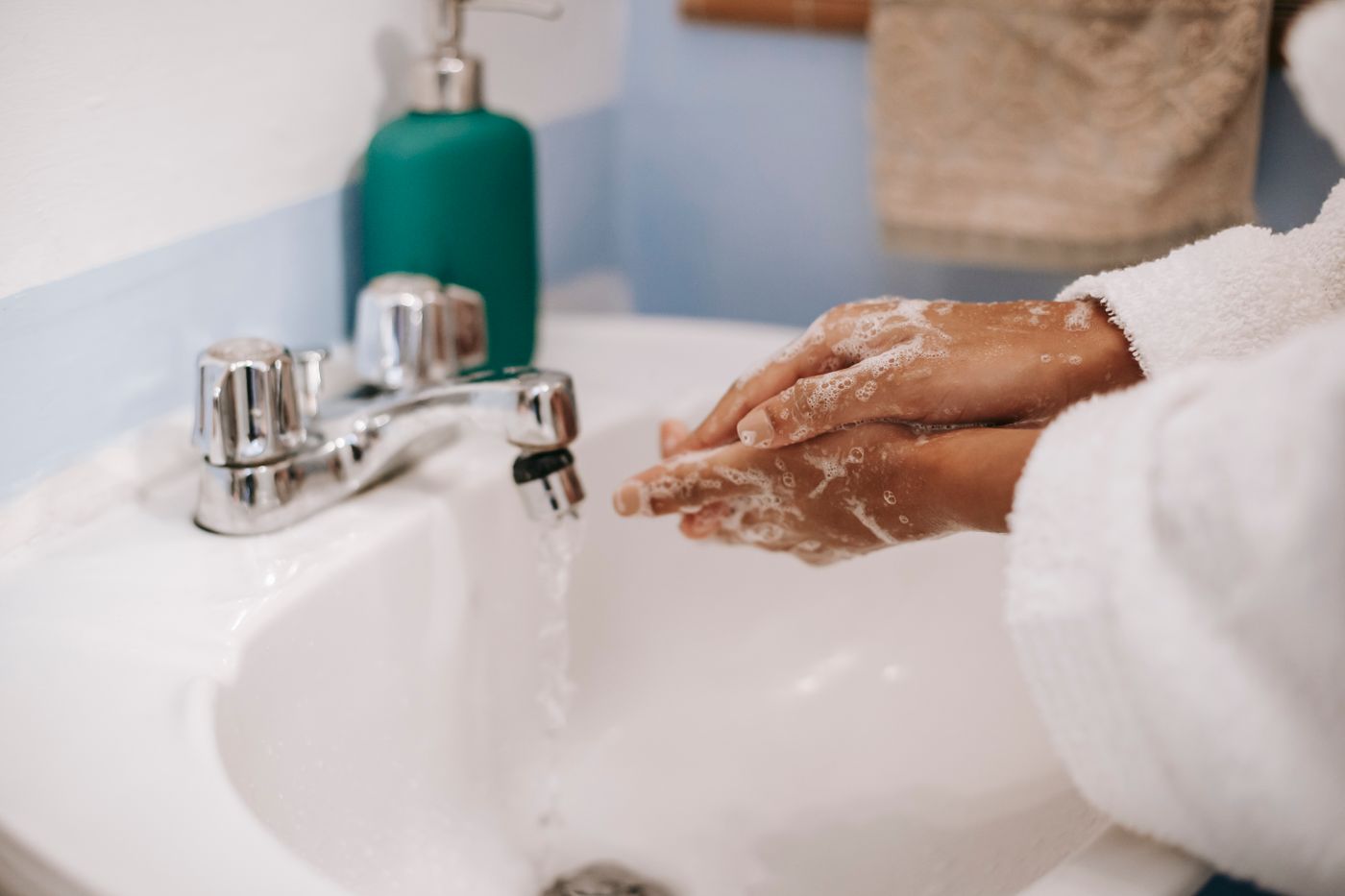
Soap-and-water technique
Clean every hand surface—not only the palms
Wet hands with clean running water
Apply enough soap to cover both hands.
Lather palms and backs of hands
Rub across the full surface rather than concentrating only in the centre.
Interlace the fingers
Clean between fingers and around the sides of each digit.
Rotate around each thumb
Thumbs are commonly missed during quick washing.
Rub fingertips and nail areas
Work fingertips against the opposite palm to clean around the nail edges.
Rinse and dry completely
Use a clean single-use towel or the approved drying method, then avoid touching dirty surfaces.
For general handwashing, scrub with soap for at least 20 seconds before rinsing.
Frequently missed areas
Give extra attention to six hand zones
Fast hand hygiene often leaves gaps. A consistent sequence reduces the chance that the same areas are repeatedly missed.
Alcohol hand rub
Use enough product and rub until fully dry
Cover every surface
A small drop that disappears immediately may not cover both hands.
Use the same coverage sequence
Palms, backs, fingers, thumbs, fingertips and wrists all need attention.
Do not wipe it away
Continue rubbing until the hands are completely dry before touching the client or tools.
Use a product containing at least 60% alcohol when an alcohol-based hand sanitiser is selected.
Beauty-service moments
When hands should be cleaned again
Before touching the client
Clean hands after preparing the station and immediately before beginning direct contact.
Before touching clean tools or dispensed product
Do not move from setup, payment or phone use directly to clean supplies.
After contact with skin, hair, nails or body fluids
Clean hands before moving to another area, surface or client.
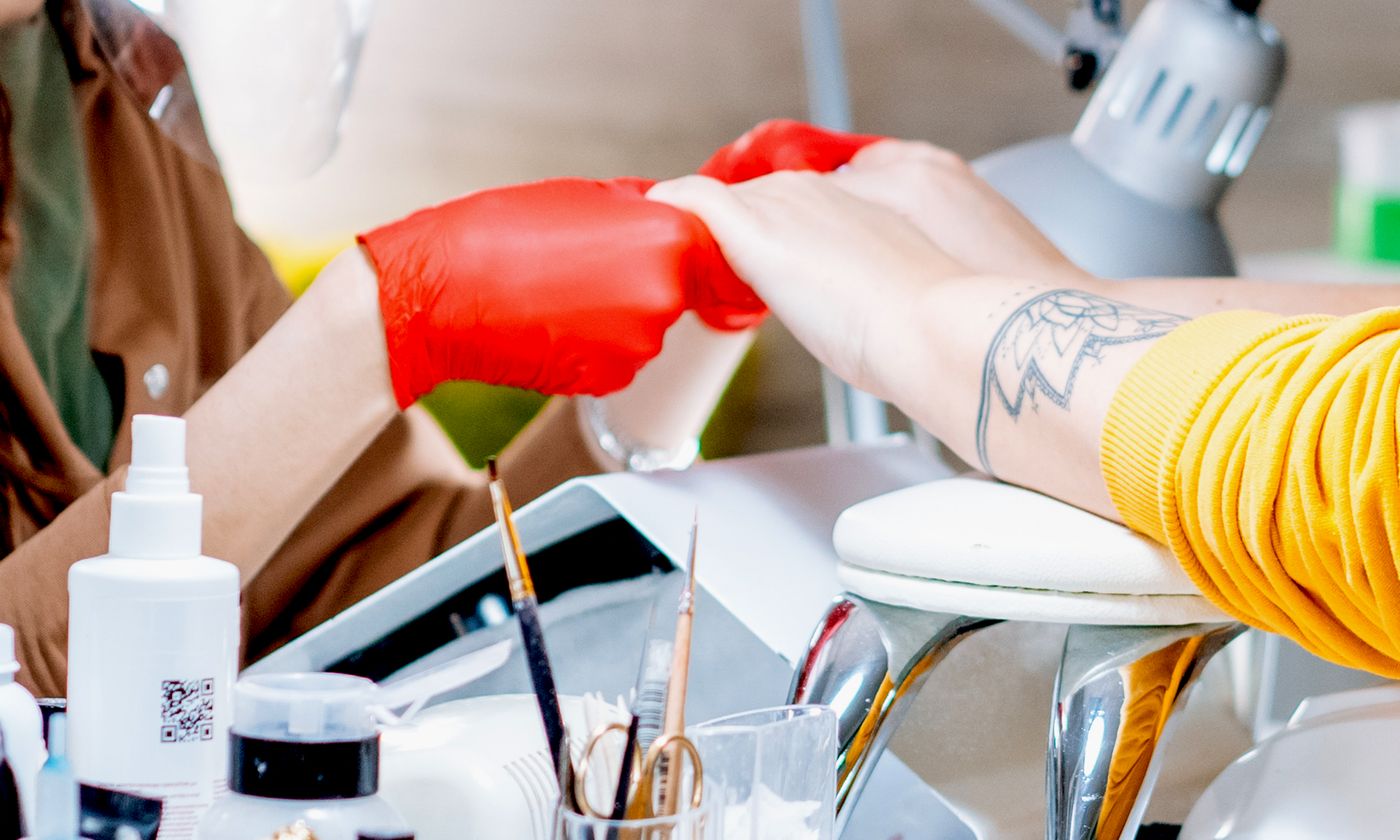
After removing gloves
Hands can become contaminated during glove removal or through unnoticed glove defects.
After handling used tools, towels or waste
These items belong to the contaminated side of the workflow.
After touching a phone, face, hair, door or payment device
Clean hands again before returning to the service.
The glove truth
Gloves are a barrier—not a substitute for hand hygiene
Disposable gloves are used for specific risks and tasks. They do not make repeated touching safe.
Clean hands before putting gloves on
Gloves should begin on clean, dry hands.
Use one pair for one client and task
Change gloves when moving from contaminated work to clean work.
Replace torn or heavily contaminated gloves
Do not continue a service with a damaged barrier.
Never wash disposable gloves for reuse
Washing or sanitising them can damage the material and spread contamination.
Clean hands immediately after removal
Glove removal is itself a hand-hygiene moment.
What is on the technician’s hands?
Nails and jewellery can interfere with cleaning and glove use
Keep working nails practical
Very long nails can make fingertips harder to clean and may puncture gloves.
Do not work with lifting or heavily chipped polish
Damaged polish can create rough edges and make cleanliness harder to assess.
Reduce items that obstruct hand cleaning
Jewellery can trap product, moisture and residue around the skin.
Cover or manage cuts according to policy
Cracks and wounds need protection and may require changing the assigned task.
Clean hands do not excuse poor dispensing
Protect products from repeated hand contact
Even freshly cleaned hands should not be repeatedly dipped into a shared jar during a service. Product handling needs its own contamination controls.
Prefer pumps or controlled dispensers
Closed dispensing reduces direct contact with the remaining product.
Use a clean spatula for jars
Dispense the required amount onto a clean palette instead of returning to the container.
Never double-dip a used applicator
Once an applicator touches the client, it should not return to shared product.
Clean pump tops and container exteriors
High-touch packaging can continue the contact chain between services.
The hygiene reset
Stop and clean again whenever the sequence is broken
The correct response to an accidental touch is not to ignore it because the service is already underway. Pause, remove and discard contaminated gloves when relevant, clean hands using the appropriate method, replace affected supplies and continue only after the clean workflow is restored.
Protect the hands that perform the work
Dry, cracked skin makes hygiene harder to maintain
Use the approved soap and hand rub
Harsh, fragranced or incompatible products can increase irritation.
Pat hands completely dry
Persistent moisture under gloves can worsen skin irritation.
Use a workplace-compatible hand cream
Choose a product that does not interfere with glove material or the service procedure.
Address dermatitis promptly
Persistent redness, itching, cracking or weeping skin needs assessment and workplace review.
What a client should notice
Good hand hygiene is visible without becoming theatrical
The professional cleans their hands before direct contact, repeats hygiene after gloves or contaminated tasks and avoids touching phones, hair, doors or payment devices before immediately returning to the service.
Hand sanitiser and a handwashing station are easy to access, products are dispensed without repeated dipping and clean tools are handled with clean hands.
Client participation
Clean service hands can include the client’s hands too
Clean hands when the service involves nails or hand contact
This reduces contamination carried from phones, transport, doors and personal items.
Avoid returning to the phone repeatedly
The phone is a high-contact object and can recontaminate freshly cleaned hands.
Pause and repeat hand hygiene
Use a tissue or elbow and clean hands before resuming the service.
Return to the sink
Hand rub is not a shortcut for visible contamination
Oils, creams, powders and adhesives remain visible
Blood or another body fluid has contaminated the hands
Soap and water are required afterward
Dust and debris cannot be removed by rubbing alcohol over them
Professional assessment
When hand skin needs medical attention
Seek medical assessment for painful cracks, spreading redness, swelling, pus, persistent blisters, weeping skin or symptoms that repeatedly worsen after a specific glove, soap, disinfectant or nail product.
Ongoing dermatitis can affect safe hand hygiene and may require product substitution, workplace controls and personalised treatment.