Hair Integrity · Rembeka Journal
Healthy Care for Black Hair
Black and African hair is naturally diverse in curl pattern, density and texture, but many strands share one important characteristic: they can be fragile and prone to dryness or breakage. Healthy care therefore focuses on moisture, gentle handling, controlled heat, low-tension styling and early attention to thinning or scalp discomfort.
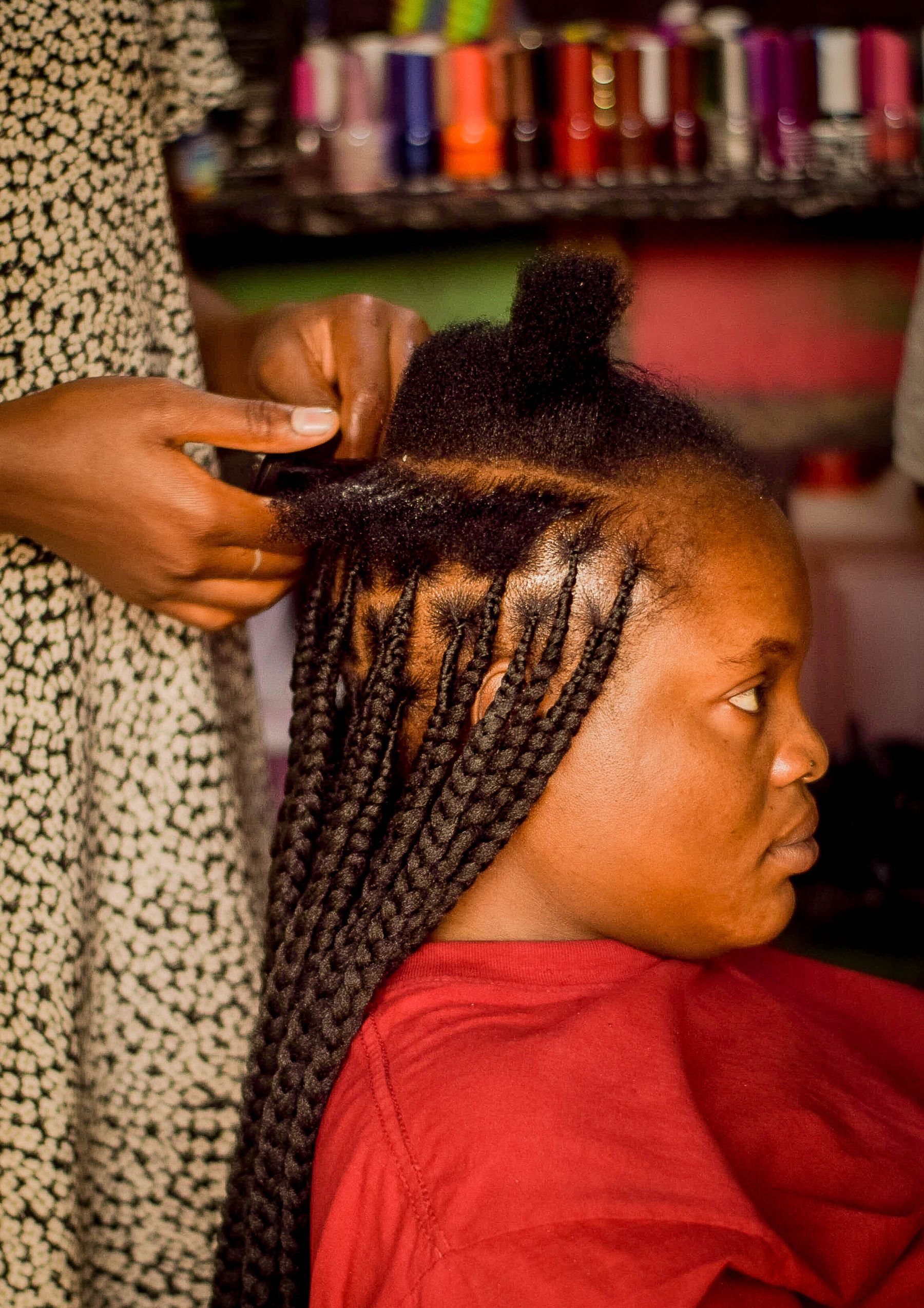
Start with the strand
Why Black hair often needs a gentler routine
Curved and coily strands have more bends along the hair fibre. Natural scalp oils may travel less easily from the roots to the ends, which can leave the lengths drier and more vulnerable to friction.
The oldest part of the hair is at the ends. Those ends have experienced the most washing, styling, heat and manipulation, so they deserve the most conditioning and the least force.
The four foundations
Keep the routine simple and protective
Clean the scalp
Remove sweat, flakes and product buildup without aggressively stripping the hair.
Condition every wash
Use enough conditioner to create slip, especially through the mid-lengths and ends.
Handle slowly
Detangle in sections, start at the ends and stop when the comb meets resistance.
Reduce stress
Limit excessive heat, repeated chemical processing and painful hairstyles.
Wash day
A complete routine from scalp to ends
The goal is to clean the scalp while preserving softness and reducing unnecessary tangling.
Divide the hair into sections
Sectioning makes dense or long hair easier to wash, condition and detangle without pulling.
Place shampoo on the scalp
Massage gently with fingertips. Avoid scratching with nails or piling the lengths on top of the head.
Let the rinse clean the lengths
As the shampoo rinses away, allow it to move down the hair instead of scrubbing fragile ends.
Condition from mid-lengths to ends
Concentrate most conditioner on the oldest areas and allow enough time for the hair to soften.
Detangle while the hair has slip
Use fingers or a wide-tooth comb, beginning at the ends and gradually moving upward.
Dry without friction
Use a soft T-shirt or microfibre towel and press out water instead of rubbing the hair.
How often should it be washed?
Choose a rhythm that respects both scalp and strand
Many Black-hair routines work well with washing approximately once a week or every other week. This helps remove product buildup without subjecting the hair to unnecessary dryness.
Exercise, scalp conditions, protective styles, oiliness and product use can change the ideal schedule. Persistent itch, flakes, odour or pain should not simply be covered with more oil.
When the scalp feels coated
Sweat, flakes, itching or visible buildup usually mean the scalp needs attention.
When the scalp feels comfortable
Keep a predictable rhythm rather than waiting for severe buildup.
When symptoms continue
Pain, persistent flakes, bumps or hair loss may need professional assessment.
Moisture placement
Not every area needs the same amount of product
Keep buildup light
Use only what is needed. Heavy oils and pomades can coat the scalp and hairline.
Support manageability
Use lightweight conditioning when the roots tangle, without smothering the scalp.
Restore softness
Condition evenly and work through small sections to reduce snapping.
Protect the oldest hair
Give the ends the most attention because they are the driest and most fragile.
Detangling without breakage
Use patience instead of force
Add slip first
Conditioner or a suitable detangler reduces friction before combing.
Work in sections
Smaller sections make knots easier to identify and release.
Start at the ends
Clear the lowest tangles before moving toward the roots.
Stop at resistance
Separate difficult knots manually instead of forcing the comb through them.
Heat control
Use the lowest temperature that creates the result
Repeated high heat weakens the hair fibre. Use a heat-protecting product, keep tools moving and reduce how frequently flat irons, hot combs and high-temperature dryers are used.
Air-dry or cool airflow
Useful when time and style allow.
Controlled blow-drying
Use sections, distance and heat protectant.
Flat iron or hot comb
Use less often and at the lowest effective temperature.
Protective styling
A style is not protective when it causes pain
Protect the edges
Ask for looser braids and extensions around the temples and front hairline.
Watch for tenderness
Pain, burning or thinning at the centre of the scalp should not be ignored.
Reduce pulling
Shorter hairs at the back can be strained by heavy or tightly installed styles.
Rotate style lines
Changing the position of parts reduces repeated pulling on the same follicles.
Relaxers and chemical services
Protect hair that has already been processed
Chemical straightening can weaken the fibre and irritate the scalp when applied incorrectly. Professional application, careful spacing and limiting touch-ups to new growth reduce unnecessary overlap.
Check the scalp
Delay service when the scalp is scratched, inflamed or broken.
Protect processed lengths
Do not repeatedly apply relaxer over hair that is already relaxed.
Condition and reduce heat
Chemically processed hair needs moisture and gentler styling.
A simple care rhythm
Consistency matters more than product overload
Condition and detangle
Use enough slip and handle wet hair carefully.
Check the scalp and edges
Look for pain, flakes, bumps, breakage or thinning.
Review the style pattern
Rotate parts and give frequently pulled areas a rest.
Breakage or hair loss?
They need different solutions
Short pieces and uneven length
Hair snaps along the fibre because of dryness, friction, heat, chemicals or force.
Full-length strands from the root
Some shedding is normal, but a major increase deserves attention.
Thinning where styles pull
The hairline and temples are common early locations.
Widening or tenderness at the crown
Hair loss beginning at the centre can require early dermatological assessment.
Professional assessment
When healthy hair care needs medical guidance
Arrange a dermatology review for noticeable thinning, widening parts, smooth or shiny patches, scalp pain, burning, persistent bumps, significant flakes or changes in hair texture.
Early assessment matters because some forms of traction and inflammatory hair loss can become permanent when the follicle is repeatedly damaged.